Here are the final snippets from my radio interview on Sportsline on Hot102FM in Jamaica last week Monday. The show was hosted by Wayne Lewis and Trudy-Ann Williams, while Bruce James, the President of MVP track club (where Shelly-Ann Fraser-Pryce trains), also made an appearance as we discussed the recently concluded World Championships:
We also discussed Jamaica’s current pedigree in sprinting – Wayne tries to get controversial and critical about Jamaica’s performance at the World Championships, and I eventually come to Bruce James’ rescue (not that he needed me to!)
Finally, Bruce James and I both give our high and low points from the World Championships – Enjoy!
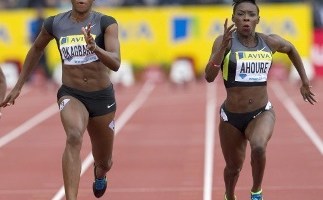
Last night I made an appearance on Sportsline, a Jamaican radio show on their Hot102FM channel to review the just concluded World Championships. I shared the airwaves with none other than MVP President Bruce James who focused on Jamaica’s 6 Gold, 2 Silver and 1 Bronze medal performances at the Championships, while I brought the outsider’s perspective, speaking mainly on the double medal feats of Blessing Okagbare of Nigeria and Murielle Ahoure of Cote d’Ivoire.
In this 9 minute section of the show, we discuss the Making of Champions documentary, the blog, investment in athletics in Nigeria, and Bruce James quizzes me on why Nigeria entered Blessing into 4 different events (100m, 200m, Long Jump and 4x100m) for these Championships! Click on the below to listen to our discussion…enjoy! (You might be wondering how come I appeared on a radio show in Jamaica yesterday? Well, the station dialled me into the discussion from my current base in the UK!)
Bruce James is more or less one of the founding fathers of the age of the Professional Track Club in Jamaica, after playing a pivotal role in setting up MVP Track & Field Club in 1999 – MVP is home to the likes of Shelly-An Fraser-Pryce, the double Olympic 100m Champion who became the first woman in World Championship history to win triple Gold in the 100m, 200m and 4x100m!
Audio is courtesy of Hot102FM in Jamaica. Watch out in the next few days as I release more snippets from our Sportsline conversation yesterday!
On Friday evening, Blessing Okagbare won her second World Championship medal in a week – bronze in the 200 metres – to ensure that Nigerians for the first time since 1999 had something to celebrate at the end of these championships. Indeed, Blessing single-handedly ensured that Nigeria equaled its best ever medal tally of 1 Silver and 1 Bronze at a World Championship, from 1999 when Glory Alozie took Silver in the 100m hurdles and Francis Obikwelu took Bronze in the 200 metres. Sadly for Nigeria, Alozie and Obikwelu, its two best athletes from that era, switched to Spain and Portugal respectively, both in 2001, creating a void which has since been left unfilled until now!
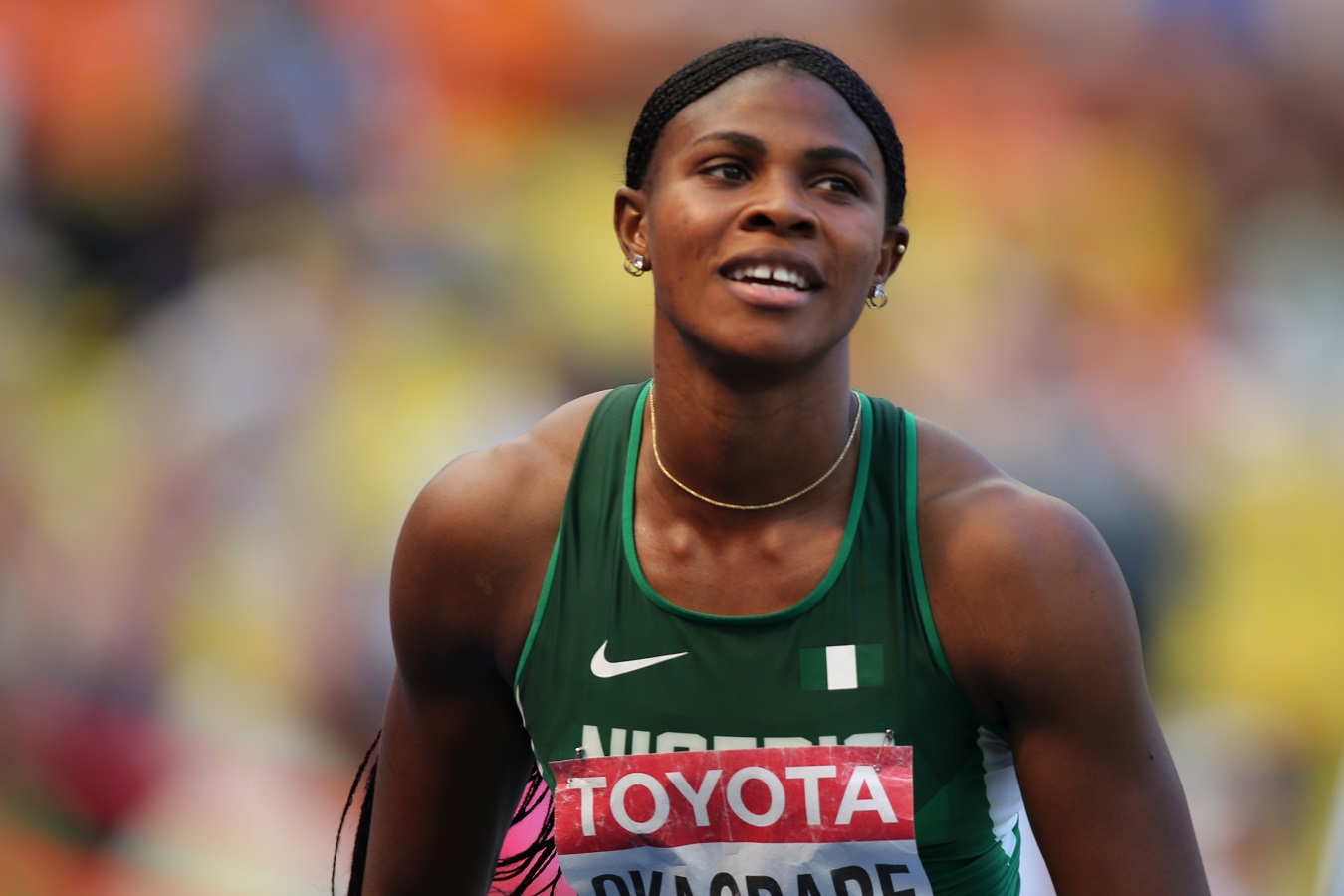
Blessing’s feat ensured that she became the first ever Nigerian to become a double individual medallist at either the World Champs or the Olympics, and doing it within the same championships should be especially commended. Blessing had the busiest schedule of any athlete in Moscow, competing in the 100m, 200m and Long Jump, and but for that hectic schedule, she may have also medalled in the 100 metres – I am extremely happy for her that she won that Bronze in the 200 metres and put to bed any suggestions that even I had prematurely raised about her not performing when it mattered the most. This lady is truly a Championship performer, and her 2 medals from 3 events in a packed week is more than enough evidence of that!
Including her Long Jump bronze from the Beijing Olympics in 2008, Blessing is already well on her way to becoming Nigeria’s most decorated athlete of all time. I would love to see her continue to attack all 3 events at major championships, but she may have to decide in the future to forego one (maybe the long jump?) to improve her chances in the other two. Certainly if the women’s long jump is not moved from the day before the 100 metre final in future championships, that might continue to hamper her best prospects in the marquis sprint event. Perhaps organisers could adjust the schedule to accommodate an athlete as supremely gifted as Blessing? In the past this has been considered for the likes of Carl Lewis and Michael Johnson, in their bids in years gone by to win multiple events at major championships!
Cote d’Ivoire’s Murielle Ahoure also had a fantastic championship, finishing with Silver behind Shelly-Ann Fraser-Pryce in both the 100m and 200m. This lady has stepped up massively from her 7th and 6th place finishes at the Olympics last year, and these are her country’s first ever medals at a World Championships in the 30 year history of the event! Both ladies can only gain more confidence from their medals, and personally I am looking forward to a great rivalry between them for years to come. Granted, my prediction that at least one of them would break the 200 metre African record on Friday night did not come to pass, but I look forward to seeing both of them in the coming years going for both Mary Onyali’s 200 metre record (22.07s) and Blessing’s 100m African record (10.79s)! Both of them will be looking towards Rio 2016, and the possibility of breaking Shelly-Ann Fraser-Pryce’s dominance in the 100m (and now the 200m) by then!
If Ahoure and Okagbare continue to develop and progress the way that they have so far, they could well lead the way for the renaissance of world class sprinting (and jumping) in Africa. That said, the incredible successes of these two great athletes should not paper over the fact that countries like Cote d’Ivoire (with 23 million people) and Nigeria especially (with over 170 million people) could and should be doing a lot better in Athletics. It should be noted that both Murielle and Blessing as sprinters are products of the American collegiate system. Obviously Blessing’s Olympic Bronze medal in 2008 showed that with her natural talent she had the potential to become a big star, but she would not have had the opportunity to blossom the way she has if she had stayed in Nigeria. There is simply no programme in Nigeria or elsewhere in West Africa that allows for natural athletic talents to be moulded into world class performers – think of how many people with talent similar to Kirani James or even Usain Bolt who will never be discovered or developed in Africa? Perhaps it is time for Africa to take a leaf out of Jamaica’s book and stop outsourcing the development of its athletes to the American college system?
Here’s another look at my video short entitled “Long Distance”, showing how far behind Jamaica that Nigeria has fallen in Athletics – we used to be on par back in the nineties!
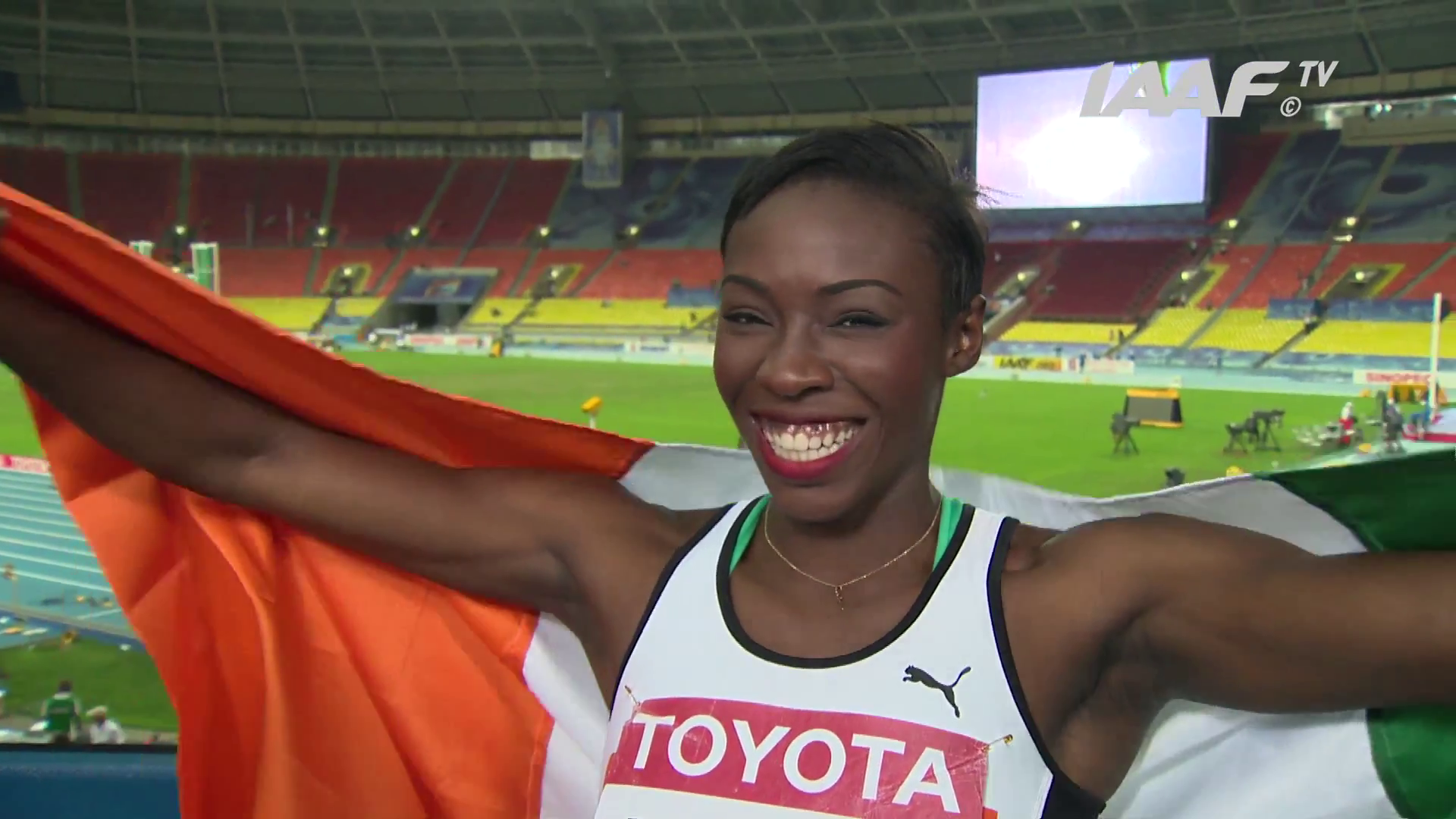
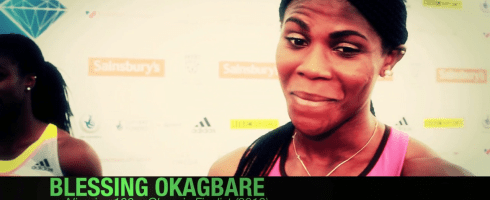
Before assessing the medal chances of Murielle Ahoure and Blessing Okagbare in the 200 metres starting tomorrow, it would be remiss of me not to hail Ahoure’s Silver medal in the 100 metres on Monday night – the first medal of any colour for Cote d’Ivoire in the 30-year history of the World Championships! Despite not being mentioned as a medal contender by most commentators, Murielle’s record making Silver medal should not come as a big surprise. Along with Blessing, she has been steadily improving over the last couple of years, leading the way for African athletes to mix it with the best in the world. Ahoure actually finished 7th and 6th respectively in the 100m and 200m finals at London 2012, so after stepping up to Silver in Moscow, she will go into the 200m tomorrow with full confidence that she can get a medal there as well. In a country that usually only has their football stars such as Didier Drogba and Yaya Toure to cheer about, she is quickly becoming a national celebrity in her own right. Her interview following her Silver medal performance is in French, but having lived in the US since she was a teenager, she also speaks English fluently – this was her after the heats on Sunday:
So which of Ahoure and Okagbare carry Africa’s best hope for a medal in the 200 metres? This is definitely a tight call. Both have run three 200m races each this season, and both are unbeaten. Both have beaten Shelly-An Fraser-Pryce over this distance in the Diamond League this season, Murielle in Monaco, and Blessing in Birmingham. Ahoure even beat Olympic Champion Allyson Felix in Rome, with the absolute swagger of a woman who knows that she’s in great form this season. Every time Ahoure steps on to the track and runs a Personal Best, she sets a new National Record – this was the case with the 22.36s in Rome and the 22.24s in Monaco, which is the second fastest time in the world this year so far, behind the 22.13s Shelly-Ann Fraser-Pryce ran at the Jamaican trials. One can certainly not count Ahoure out of the medal reckoning in the 200 metres – watch out for yet another National Record, which she will probably need to get a medal!
Blessing will be looking to quickly get over the disappointment of her 6th place finish in the 100 metres on Monday night, to grab a much needed medal in the 200 metres. For the form that she’s been in this year, it would be unwise to discount her despite things not going according to plan for her in the 100 – I have been saying since we started seeing her coming from behind to win 100 metre races at the London Olympics last year, that the 200 metre would most likely become her more dominant event, and now she has a fantastic opportunity to show just that. Blessing set her 200m PB of 22.31s in her first race of the outdoor season in California in April, and with a PB and new African Record of 10.79s in the shorter sprint, I really do think that Mary Onyali’s 200m African Record of 22.07s is under threat from Blessing – I think she has the potential to go under 22 seconds, and that certainly would be more than enough for some colour of medal.
It goes without saying that the 200 metres is going to be billed by all commentators as a head-to-head duel between Allyson Felix and Shelly-Ann Fraser-Pryce. It would certainly be foolish to discount the London 2012 Gold and Silver medallists at this distance. If Allyson runs at her best, she is probably unbeatable, but has only won two of her four races this season, surprisingly losing to newcomer Kimberlyn Duncan at the US trials, and to Ahoure in that race in Rome. She did win her final outing before Moscow at the London Anniversary Games, so maybe she is coming back into form at the right time. If she can return to her Personal Best form (21.69s) then she will likely not be stopped from winning back her 200m world title that she relinquished to Veronica Campbell-Brown 2 years ago in Daegu. As for Shelly-Ann, she is in such imperious form, winning the 100m so emphatically on Monday night, that one can be forgiven for assuming that the 200m will be a straight fight between her and Felix. But can she sustain her incredible 100m speed over the longer distance against some of the taller girls, like Blessing? Only time will tell, but surely it would be a surprise to see her finish outside of the medals.
One can also not discount the other Americans, Kimberlyn Duncan and Jeneba Tarmoh, who should also certainly make the final, and the Bahamians Anthonique Strachan and Shaunae Miller, who are my dark horses for this event. Strachan especially, who was the double 100m and 200m Junior (U-20) World Champion last year, should also make the final and from then on anything is possible – she is fifth fastest in the world this year with 22.32s so perhaps she may even threaten the Bahamian Record of 22.19s set all the way back in 1999 by one Debbie Ferguson-McKenzie. Miller is probably a year behind Strachan in terms of development, so I expect she would be happy to just make the final. I don’t really expect an individual medal for either of them at these championships, but expect great things from both of them in the future – having travelled to the Bahamas this year to watch the Caribbean Junior and Youth Games (CARIFTA), I can attest that the amount of talent the Bahamas is churning out with a population of only 350,000 people is simply astonishing!
Does my analysis mean that Blessing and Murielle are fighting for just one medal, likely to be Bronze? Perhaps, but not necessarily. It would take an upset of one of the huge favourites for Africa to get two medals in an event in which no African woman has ever won a World Championship medal, but we have already seen huge upsets this week, with Amantle Montsho losing the 400m by a nose to Christine Ohuruogu, and Olympic Champion Kirani James being comprehensively defeated by Lashawn Merritt at the same distance. One thing’s almost certain for me – Mary Onyali’s African Record will be up for grabs come Friday, but will it be broken by Ahoure or Okagbare? Or indeed by both of them? Who will come out on top in this 200m sub-plot, the battle for the title “Queen of African Sprinting”? After the 100 metres, it’s already one-nil to Ahoure. Which of them will medal in the 200 metres? I for one certainly hope that it can be both of them!
Okagbare goes in Heat 2 in the first round of the 200 metres at 8.02am (British Summer Time / Nigerian Time) tomorrow, while Ahoure is in Heat 7 at 8.37am. The semi-finals are also tomorrow, from 4.45pm, and the Final is at 6.15pm on Friday. Go Team Naija, and Go Team CIV!
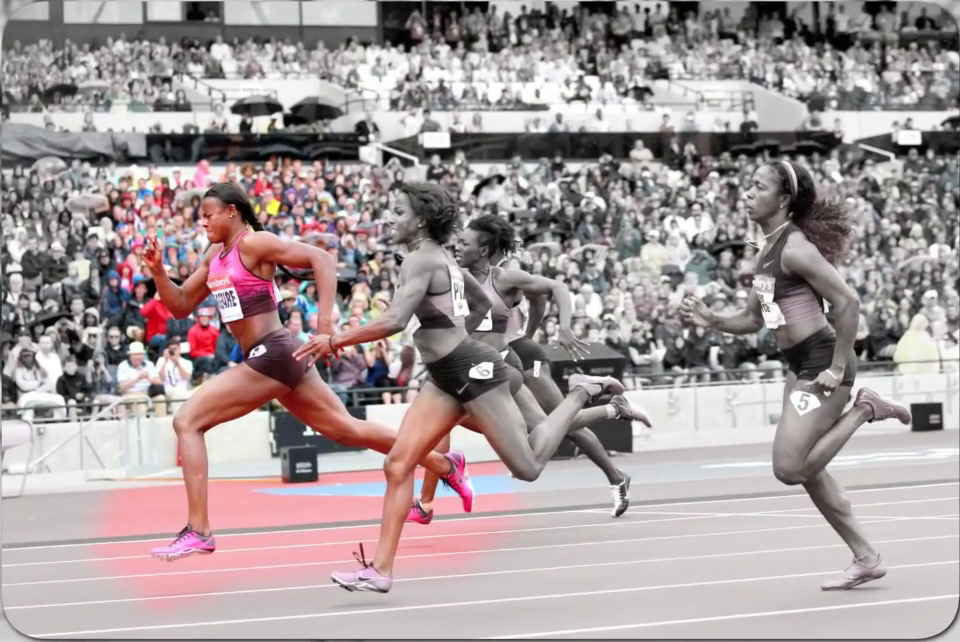
If Blessing Okagbare delighted Nigerians yesterday with the nation’s first World Championship medal since 1999, the 100 metre final today was to end in disappointment for Blessing and the millions of Nigerians who would have tuned into the race to see if she could possibly challenge the mercurial Shelly-Ann Fraser-Pryce for the title, as she had been threatening to all season. Unfortunately for Blessing, she finished a disappointing sixth in a performance quite reminiscent of her eighth place finish in the Olympic 100m Finals last year. Similar to last year, Blessing came into the big championship after a great season that set her apart as a serious medal contender in the 100m. This season her performances have been even more emphatic than the last – when you think that in every single one of her races this season over the 100m, she finished in either 1st or 2nd position, only losing to Shelly-Ann Fraser-Pryce (but getting closer to her with each race), one could have been forgiven for quietly hoping that she could upset the diminutive Jamaican in Moscow. Certainly Blessing was a shoe-in for at least the Silver medal, especially after breaking the African record twice in one day, with 10.86s and 10.79s runs in the space of 90 minutes at the London Anniversary Games two weeks ago. If she had reproduced either of those runs she would be the silver medalist right now…
So what went wrong for Blessing? Was it that the long jump competition yesterday took a lot out of her, so she couldn’t produce her best 100m today? Did she pick up a knock of some sort from the long jump? Her 100m rounds seemed like she was running well within herself and conserving her energy for the final, so how come she could not produce the goods when it mattered the most? Everyone who watches women’s sprinting at the moment will know that Blessing is not the greatest starter and will not be at the front of the race after 50 or 60 metres, but much like Christine Ohuruogu in the 400 metres (congratulations to her on the win today!), she will catch all the other girls before the line, unless they get a start like Shelly-Ann did today. For Blessing, after 50 or 60 metres today, she was exactly where she always is in her races at that stage, but at that point she seemed to drop her head – that drive to the line that has become her trademark evaporated. Either the energy just wasn’t there (which I doubt was the case, after seeing how she put those two races she put together at the London Anniversary Games) or perhaps this was because she could see that Shelly-Ann was well ahead and was not going to be caught?
If the latter is the case, then it casts the mind back to Asafa Powell, who went into multiple Olympic Games and World Championships as one of the favourites for GOLD, but often finished with nothing, after more or less giving up during races after realizing that he wasn’t going to win – I reckon that he probably threw away a Silver or Bronze on a couple of occasions because he mentally gave up after realizing he wasn’t going to get the GOLD. Luckily for him, he eventually won a couple of Bronze medals at the World Champs, but there was a 4 year period (for 3 of those years he was the World Record Holder) where he should have won everything available to him before Usain Bolt showed up. Unfortunately for Blessing, after failing to deliver a medal in two consecutive global finals where she had strong prospects, it may take her some time to shake off the tag of someone who doesn’t deliver when it matters the most. She is in that 4-year period where she needs to be wresting the 100m mantle away from the likes of Shelly-Ann and her training partner Carmelita Jeter. Come Rio 2016, who knows how good the young Americans who all made today’s final (English Gardner, Alexandria Anderson and Octavious Freeman) are going to be, and who knows who else is going to show up in women’s sprinting by then. This should have been Blessing’s moment to shine, to strike while the iron is hot…
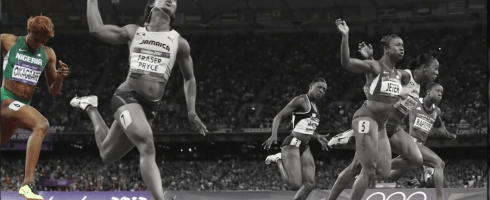
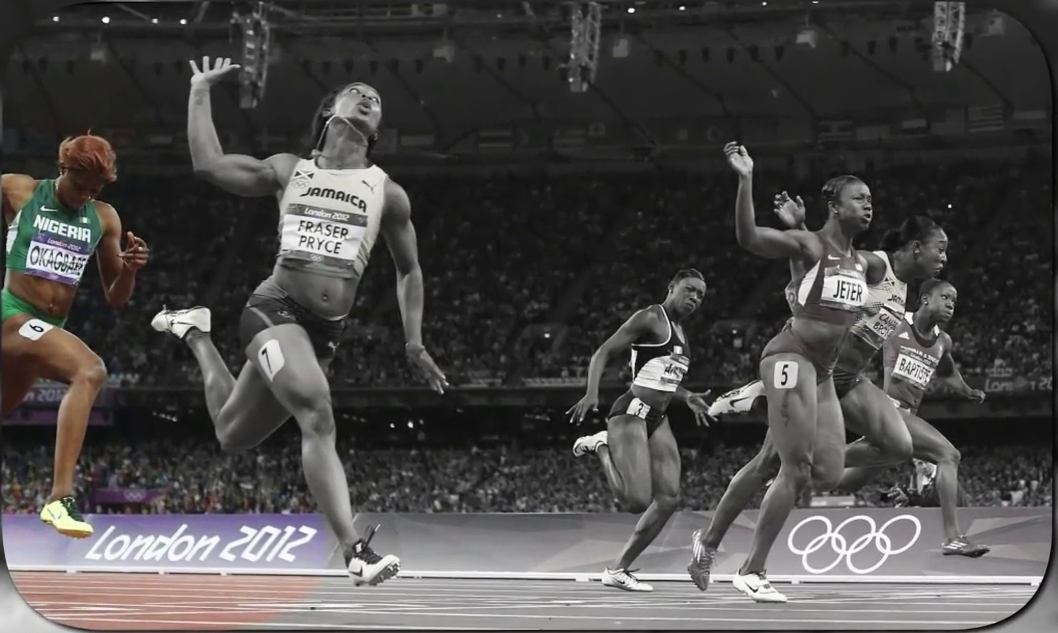
Blessing Okagbare finishing 8th in the 100m final at London 2012
The London 2012 final would have been disappointing for her, but this one will hurt even more because she will know that if she had executed the way she can, in the form that she’s been in this year, she would be Nigeria’s first ever medalist in the individual 100 metres right now. Now she has to wait 2 years for another opportunity to be in this position, and even if she is the best in the world by then, there will be question marks as to whether she has the temperament for the big moment, until she actually wins a global title or medal in the 100 metres. Luckily for Blessing, she has an immediate chance to put things right for herself later this week in the 200 metres, the event I have always thought is going to be her better event. If Blessing was reading this, I would encourage her to put today behind her very quickly and come out like a wounded lionness for the 200 metres. She will desperately need it now, to immediately put to bed any self-doubt that would be creeping in now about her own ability to deliver on the biggest stage. I still believe that Blessing is going to take Mary Onyali’s 200 metre African Record of 22.07s this week enroute to a medal in that event. All the talk will be about Allyson Felix and Shelly-Ann Fraser-Pryce going head to head for GOLD in that event, but I would urge all Nigerians to put their support fully behind her, so that she can put today’s performance behind her as quickly as possible.
For Nigeria, if anything today has shown, it is that we must STOP relying on only one athlete for Track & Field success by implementing a world-class program at home, that will allow us rival the Americans and Jamaicans on a consistent basis. Jamaica had 4 men in the 100m final yesterday and ended up with 2 medals there, while the US had 4 women in today’s final and finished with one medal. It should be noted that the Afro-Caribbeans and African Americans who currently dominate sprinting are mostly descended from West Africa, so essentially there is a lot more of that same talent they have wasting away in West Africa, where Nigeria should be leading the way with a population of 170 million (compared to Jamaica’s population of just 3 million)! When will Nigeria once again start producing multiple sub-10 men and sub-11 women who can do the country proud consistently on the global stage? Only time will tell!
Earlier today, Sunday August 11th 2013, in the Luzhniki Stadium in Moscow, Blessing Okagbare came as close as any Nigerian has ever come to becoming a World Champion in Athletics, when she finished 2 centimetres behind the unpredictable, yet ever-present Brittney Reese in the Long Jump – unpredictable because Reese sneaked into today’s final in 12th place of 12 athletes and on countback against her American teammate Funmi Jimoh who also jumped only 6.57m in qualifying on Saturday, but ever-present because the Olympic Champion won an unprecedented 3rd World Championship GOLD medal in a row. Blessing gave it her all with her 6.99m jump, only 1 centimetre behind her personal best, but she was always likely going to have to jump a new PB and go over 7 metres to win the GOLD. As I mentioned in my previous post on Blessing’s chances at the World Championships, my heart said GOLD, but my head said that Brittney Reese would take some beating!
Reese, despite an indifferent season that had somewhat gone downhill since she jumped 7.25m in the Doha leg of the Diamond League in May, produced the goods when it mattered the most with her 7.01m jump in Moscow. In contrast, since Blessing’s wind-assisted 7.14m jump in Doha, she’s been the most consistent jumper throughout the season, winning at the Diamond League in Lausanne and Monaco in new PBs of 6.98m and 7.00m respectively. So Blessing maintained that consistency, but just was not able to produce another PB today – even if she had improved it by 1cm, she would have won on countback (due to her next highest jump of 6.96m being better than Reese’s next highest of 6.95m). Amazing how a centimetre or two can decide championships!
Blessing’s momentous achievement cannot be understated – it is Nigeria’s first World Championship medal of any colour in 7 attempts, since 1999, when Francis Obikwelu won a 200m Bronze and Glory Alozie won the Silver in the 100 metre hurdles, equalling her African Record of 12.44s (for a third time) which still stands until today! Nigeria must not waste this opportunity to use Blessing’s exploits from these Championships, starting with this Long Jump Silver, as a springboard to propel the nation back to Track & Field reckoning on the global stage. Most importantly, we must learn from the mistakes of the Obikwelu and Alozie era that eventually led to them switching nationalities to represent Portugal and Spain respectively instead of Nigeria. I blogged about Obikwelu’s story after going to meet him in Portugal in May, and we also visited Glory Alozie in Spain last month to get her story for the documentary – it goes without saying that we must learn how to treat our best athletes to make sure that they never have to go elsewhere to realise the full potential of their athletic talents! Any whispers that Blessing could one day be poached by the US should be dispelled and dismissed once and for all. She is needed to spearhead Nigeria’s return to global reckoning!
One athlete that went in the other direction is Regina George, who competed as a junior for the US where she was born, but switched to Nigeria at the first opportunity she had, when she met Nigerian officials while competing for the US at the World Junior Championships a few years ago. Regina, at just 22, is already the current two-time Nigerian 400m Champion, was a semi-finalist at the Olympics last year, and has been consistently lowering her PB since then. She went under 51 seconds at the Nigerian Championships in June with a new PB of 50.99s, and once again lowered it to 50.84s in Moscow today behind the highly impressive Amantle Montsho, but just missed out on a fastest-loser spot in the final again. Setting a new PB at a major championships is all you can really ask of any athlete, so she must be applauded and encouraged to continue her upward trajectory – she is a fantastic athlete who could well be in medal contention by the Rio 2016 Olympics, if she is given the right support starting NOW, to achieve that. Maybe one day she can get close to Falilat Ogunkoya’s 400m African Record of 49.10s set when Ogunkoya won Bronze at the Atlanta Olympics in 1996. Though from the way Montsho is running in Moscow at the moment, that record may well be under threat right now – we’ll only have to wait until tomorrow to find out!
Back to Blessing – she goes again in the 100m semis and finals tomorrow, where she’s a good bet for at least another Silver medal. But can she upset the double Olympic Champion Shelly-Ann Fraser-Pryce, whom many commentators have already handed the race, and win the 100m GOLD? We don’t have long to find out – either way, let the Nigerian Revolution begin!
One of the very first International shoots we did for Making of Champions was back in March in Jamaica, during their High School Championships, popularly known simply as CHAMPS. We spent a week in Kingston to take in the whole competition, and to try to start understanding why Jamaicans are the best sprinters in the world right now. CHAMPS has a history of over 100 years in Jamaica, and it’s obvious that Track and Field is like a religion over there. The whole country literally stops to watch CHAMPS – it is the biggest and most popular sporting event in Jamaica. When you see the performances of the 12 to 19 year old school kids in the competition and the training they undergo to reach that level, one begins to understand why they’re so good when they become seniors…
One of the most astounding revelations of our time there came when we asked Jamaicans what they thought about Nigeria in Track & Field. It was a sobering realisation of how far Nigeria has fallen in Athletics over the last 10 years – almost every single Jamaican we quizzed about Nigeria’s pedigree in Athletics thought that Nigeria was a nation of long distance runners. This was a revelation I stumbled upon initially from speaking to one or two fans at the National Stadium in Kingston watching CHAMPS, so once I realised the trend, I decided to ask a few more people, and this was the result:
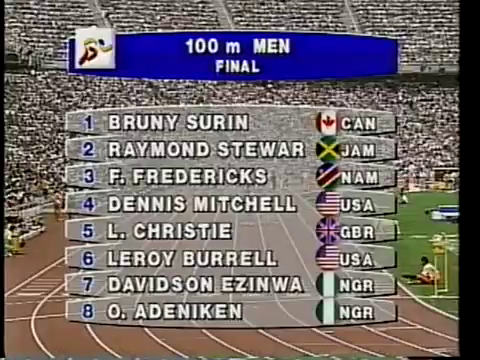
This is a particularly tragic finding for Nigeria, especially given our once rich pedigree in Track & Field, especially the sprints – did you know that until 2007, 8 Nigerians in history had run sub 10 seconds in the 100m while only 3 men representing Jamaica (Asafa Powell being the third, after Raymond Stewart and Pervical Spencer) had achieved the same feat? Usain Bolt was only the 4th Jamaican to do it in 2008, and that has paved the way for 10 Jamaicans to run sub 10 a combined total of 170 times since then (while no Nigerian has done it since Olusoji Fasuba in 2006)! Indeed, the world quickly forgets that Nigeria was on a par with, if not better than Jamaica back in the 90’s – to illustrate this, Nigeria regularly had more representatives in the Olympic sprint finals than Jamaica – at Barcelona ’92, Nigeria had 2 men in each of the 100m & 200m finals, while Jamaica only had Stewart in the 100m final – never mind that he finished 7th, while the Nigeria’s Adeniken and Ezinwa finished 6th and 8th respectively!
Line-up for 100m Final at Barcelona ’92
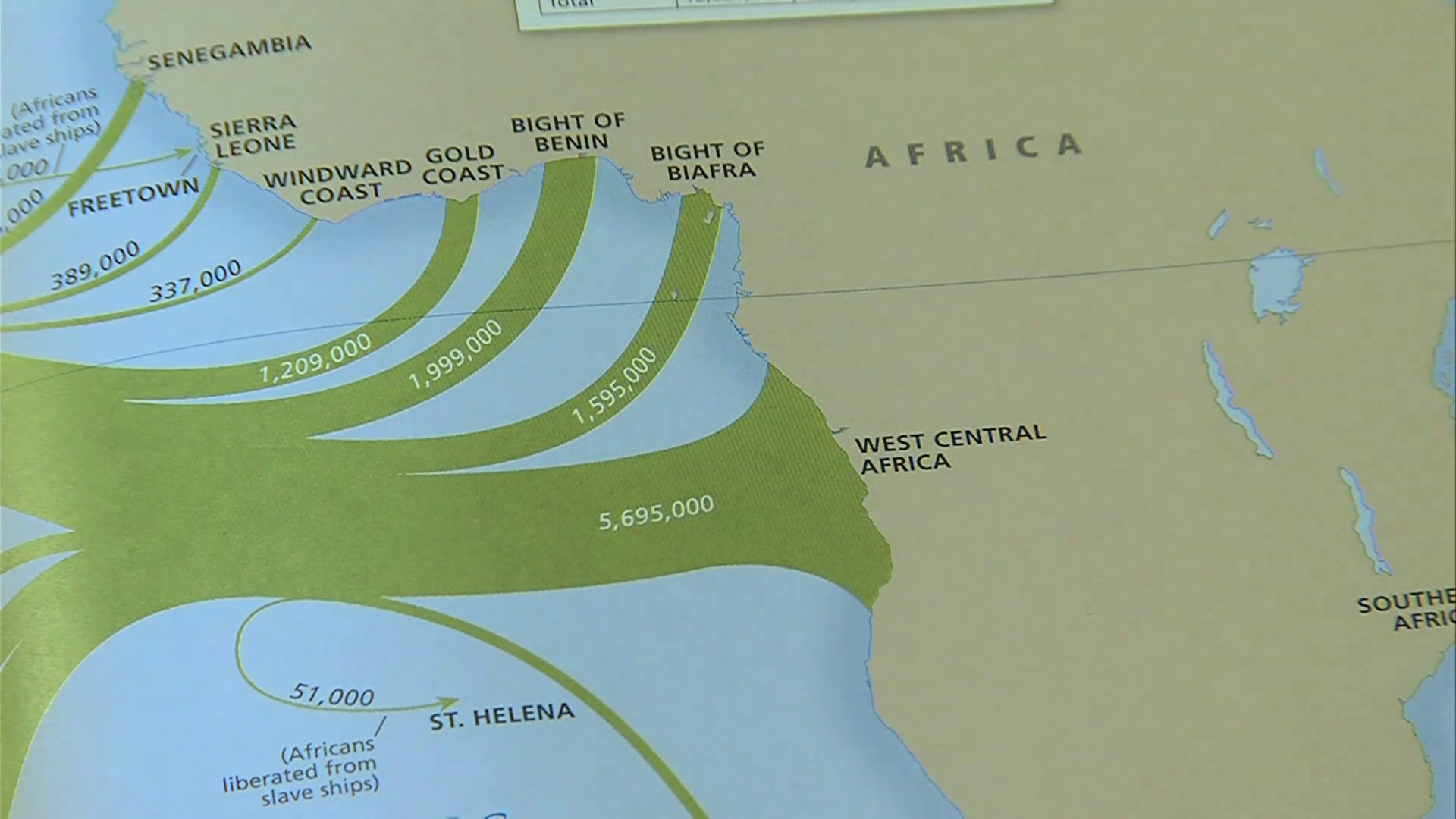
The avid Jamaican fan will respond to the above by quickly pointing out that both Olympic Champions from the 90’s (Linford Christie and Donovan Bailey) hail from and were born in Jamaica – well my response to them would be: how far back do you want to go? The misconception that Nigeria has anything to do with long distance running is clearly due to the fact that Jamaicans associate all of Africa with the global successes of the East African distance runners, mostly from Kenya and Ethiopia. But what’s most astounding about this misconception is the fact that Jamaica’s 3 million people are mostly all descended from West Africa – in fact, it has been traced that a third of the 1 million slaves that were taken to Jamaica during the transatlantic slave trade came from ports that are in present day Nigeria (ports in the Bights of Benin and Biafra), while another 30% came from Ghana (Gold Coast). These estimates are thanks to the great work of Professor David Eltis of Emory University in Atlanta, who is an expert in the history of the Transatlantic Slave Trade. We were able to meet up with him and interview him in Atlanta in May as part of the documentary. Here is a video released by Emory University talking about his book “The Atlas of the Transatlantic Slave Trade”…
Map showing the number of slaves taken from West Africa (from the Atlas of the Transatlantic Slave Trade)
Why is the link between West Africa and the Caribbean even important when we think about athletic potential and ability? Well if one believes that genetically the two peoples are more or less the same, then the difference in performance in Track & Field can only be down to the differences in culture, training, nutrition and physiotherapy. Can Nigeria (population: 170 miliion), Ghana (population: 25 million) or some other West African country replicate or even surpass the success that the tiny island of Jamaica has achieved on the global stage? Or does one believe, as Michael Johnson controversially suggested last year in his documentary Survival of the Fastest, that the descendants of the slave trade have genetically evolved to become more athletically gifted than the rest of the world (and by implication, also superior to the people from whom they descended)?
I for one do not believe that for a second, and this is something that we will address in another documentary teaser coming soon, which will feature some prominent geneticists who have done work in the genetics of sprinting! Watch this space, and in the meantime, enjoy the World Championships!
On Saturday July 27th 2013, Blessing finally broke Glory Alozie’s 14 year old African 100m record at the London Anniversary Games – and she lowered it twice in the space of 90 minutes!
As you can probably see from our latest teaser, it comes as no surprise to me that she has finally written Alozie’s time of 10.90s out of the record books – Ever since she ran a slightly wind-assisted 10.75s in Eugene on the 1st of June (+2.2m/s wind), I knew that it was only a matter of time before she would run a legal sub 10.90 secs (any time with 2.0m/s tailwind or less is deemed legal for record purposes). The next chance she had to do it was on July 6th at the Paris leg of the Diamond League. Incidentally, that was the same day we were in Madrid meeting with Glory Alozie, who was still the holder of the 100m African record until the London Anniversary Games – and Glory was very bullish about and supportive of Blessing’s chances of taking her record the very day we met with her. Unfortunately for Blessing that night, she dipped prematurely a few metres from the line to finish in 2nd place behind Shelly-Ann Fraser-Pryce in a time 10.93s. Once again, the keen observer would have noted that she had an African record in her this season…
The plot thickens slightly because of a 10.84s run that Chioma Ajunwa (Africa’s Long Jump record holder) did at the National Stadium in Lagos that was never ratified because, apparently, the right equipment was not in place to have the time ratified. I was worried that Blessing might break Alozie’s 10.90s and not Ajunwa’s 10.84, in which case Ajunwa’s time might have still unofficially cast a cloud over Blessing’s record. This turned out to be the case for less than 90 minutes on Saturday, Blessing first ran 10.86s in the semi-finals, but then came back for the final to lower the record further to 10.79s – undisputed champion! Very pleased that she has done it right before the World Championships starting in less than 2 weeks now – it shows that she’s peaking at the right stage of the season, and she will go to there full of confidence that she is a Gold medal contender in the 100 metres!
I say that Blessing is a Triple Threat in Moscow (August 10th – 18th) because I am convinced that she is about to do something unprecedented and unheard of for Nigerian Athletics. Nigeria has not won a single World Championship medal in 6 consecutive attempts. Nigeria’s last medals were won in Seville ’99 by Francis Obikwelu (200m Bronze) and Glory Alozie (100m Hurdles Silver), who incidentally switched to represent Portugal and Spain respectively, both in 2001. Blessing is a realistic contender for 3 Gold medals – the 100m, 200m and the Long Jump. Her form in all 3 events this season suggests that she will likely get some colour of medal in each – she is currently 2nd, 4th and 3rd in the world this year (10.79s, 22.31s and 7.00m) respectively in those 3 events. Her obvious height advantage over the other girls is already drawing comparisons to Usain Bolt, and if she does get three Golds at the Worlds, then comparisons to both Usain Bolt and Carl Lewis (the last world class sprinter to combine those three events), will not be misplaced!!
What is my prediction for the World Championship for Nigeria (which basically means for Blessing, since any other Nigerian medal would come as a huge surprise and bonus)? My heart says that Blessing WILL win 3 GOLDs and help our 4x100m team to sneak a Bronze medal behind the USA and Jamaica (in that order), and just ahead of the likes of Trinidad & Tobago and Ukraine. My head tells me that after winning a medal in the Long Jump (probably silver, behind USA’s Brittany Reese) on August 10th, whether she gets Gold in the 100m or silver behind Shelly-Ann Fraser on August 11th will depend on how well she recovers from the Long Jump the day before.
My big big tip is to watch out for something special from Blessing in the 200 metres (Aug 15th – 17th) – I have been saying since last year when we all saw Blessing at the Olympics that the 200 will undoubtedly become her more dominant event, because her strong finish over the longer sprint will more than make up for her poor start, which is the only thing limiting her now from running sub 10.7 in the 100 metres. In my mind, the only person who could possibly stand in her way is Olympic Champion Allyson Felix, but even she has had an indifferent season, though she did win the final 200m before the Worlds, in London last Friday. One thing is certain for me – whether Blessing gets the Gold or Silver in the 200 metres, she is definitely going to break Mary Onyali’s 18-year old African record of 22.07 in Moscow – she will certainly have to anyway to get a medal. Does Blessing have what it takes to break 22 seconds in the 200 metres? For a girl in the form of her life with a 10.79s PB in the 100 metres, I’ll leave you to answer that question for yourself!
One of the avid followers of my blog pointed out to me 32 days ago that it had been 32 days since my last Making of Champions update! Now that it’s been 2 months or so since my last update, here is our latest clip about British sprinter James Dasaolu breaking the 10 second barrier some 10 days ago in Birmingham, England, at the British National Championships…
As you can see from the clip, we had the opportunity to meet James at the IAAF Diamond League, also in Birmingham at the end of June, and even then, it was clear to me that it was only a matter of time before he would break 10 seconds – very pleased for him that he’s done it now, and that run can only be a stepping stone for him to go on to start winning medals for Great Britain on the global stage in the very near future. Dasaolu’s emergence as only the 4th British man in history to break 10 seconds should serve as reminder to all Nigerians what talents we undoubtedly have back home that are wasting away because we are not discovering and nurturing them – after all, 8 Nigerians in history have run sub-10, but none in the last 7 years! Let’s not forget that probably half of Team GB’s Track & Field athletes are of Nigerian origin!
This slideshow requires JavaScript.
Given the recent big-name withdrawals from the upcoming World Championships in Moscow in 3 weeks – Yohan Blake due to injury, Tyson Gay and Asafa Powell due to failed drugs tests – Dasaolu will be feeling confident about making the 100m final, and will know that he has an outside chance of getting a medal. He’d be delighted with a medal but he would have to become a consistent sub-10 runner to be in the mix on a regular basis. In particular, it remains to be seen if he can put two sub-10 runs together within hours of each other, these days a necessary feat to get into the final and medal at the World Championships or Olympics…The London Anniversary Games will provide a first clue as to how close Dasaolu can get to Bolt in Moscow, when he lines up against the big man himself tomorrow (Friday July 26th) for the first time since the London Olympics…
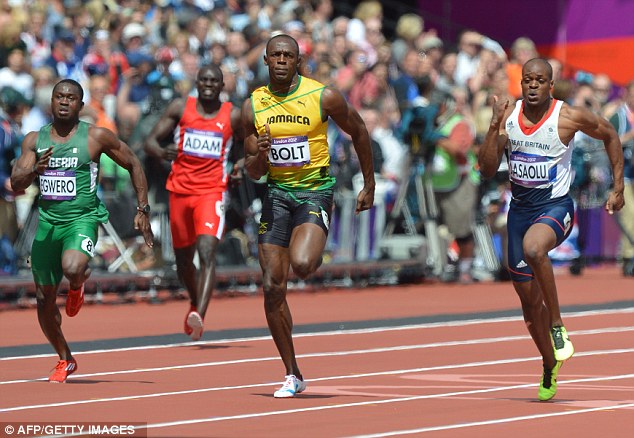
100m Round 1 at London Olympics – Usain Bolt flanked by Ogho-Oghene Egwero James Dasaolu (currently Nigeria’s and Britain’s fastest men)
If I were to predict how the medals would fall in Moscow, I’d go with Usain Bolt, Justin Gatlin and Nesta Carter as 1-2-3. Anyone else who gets to the final really does have an outside chance of getting a medal, so that will be Dasaolu’s primary goal. But he’ll also have France’s Jimmy Vicaut, Jamaica’s Kemar Bailey-Cole and Nickel Ashmeade, and USA’s Mike Rodgers and Charles Silmon , all whom have also broken 10 seconds this season, to contend with. That Bailey-Cole and Ashmeade beat the more accomplished Nesta Carter into 4th place at the Jamaican trials in June is proof that anything can happen on the day!
Just a word about the recent failed drug tests in Athletics – we would have released this teaser sooner, had the news about the failed drugs tests of Gay, Powell and 4 other Jamaicans not broken the very day after Dasaolu’s great run. It is really sad to see some of our most beloved athletes failing drugs tests at the twilight of their careers. The news undoubtedly took some of the shine off of Dasaolu’s performance the day before, and means that any single outstanding performance will likely be questioned until the public’s trust in the sport is regained over time. I might be in a minority that prefers to wait for the full stories to unfold and they are proven guilty or innocent, before dismissing or accepting their claims that they did not knowingly take any banned substances.
As much as it is imperative that drug cheats are weeded out of Athletics for good (I support returning to 4-year bans, as 2-year bans simply not a strong enough deterrent), it is also important that the sport finds ways to reduce the possibility that athletes can unwittingly ingest banned substances – some have suggested that instead of just having a banned substance list, the World Anti-Doping Agency (WADA) could create an approved substance list. This way, athletes who stay within the approved list will know that there should be zero risk of taking anything that is banned. In this scenario, there would then really be no excuse for failing a drug’s test…short of outright sabotage perhaps…?
One of the most memorable trips we have made so far for Making of Champions was our trip to Portugal to meet Nigeria’s 200m record holder and Europe’s 100m record holder, Portugal’s 100m Olympic Silver Medallist, Francis Obikwelu! Here’s a short clip from my trip, where he talks about how Lagos, Nigeria got its name from Lagos, Portugal, among other things!
How does one man hold sprint records both in Nigeria and Europe I hear you ask? Well, Francis has a very unique story that I was very keen to capture on camera – keen enough to travel all the way to Faro in the South of Portugal for a day just to meet him, while he was training with the Portuguese National Team!
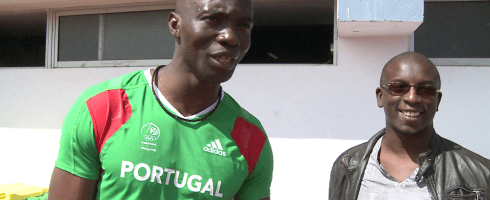
Francis Obikwelu and David Lima
Basically, Francis represented his motherland Nigeria until 2001, when he made the switch to his adopted motherland Portugal. Before his switch to Portugal, Francis had already enjoyed quite a measure of success in Nigerian colours – he won a World Championship bronze medal in the 200m in Seville in 1999, where he also set the Nigerian 200m record of 19.84s which stands untouched until today. To date he is the only Nigerian ever to run sub-20 seconds in the 200m! He was also a member of the 4x100m relay team that still holds the Nigerian record of 37.91s in that event as well! See Francis’ semi-final run in Seville that gave him the Nigerian 200m record in 1999!
The circumstances that led to Francis deciding to switch nationality were rather unfortunate for him, sad for Nigeria, but completely fortuitous for Portugal. Francis got injured competing in the line of duty for Nigeria at the Sydney 2000 Olympics. He had to go for knee surgery in Canada where he was abandoned by his national association to pay for his surgery all by himself. To make matters worse, he suffered complications in hospital – a blood clot from which he almost died, leaving him hospitalized for 2 months following the surgery…. To cut the long story short (and I will leave the remaining details for the documentary when it is released), following his discharge from hospital, once it was still clear that he wasn’t going to get the support he needed from Nigeria, he went back ‘home’ to Portugal (where he had already been living for up to 6 years prior to his injury), completed his naturalisation, and made the switch to compete for them in 2001. The rest, as they say is history – at the Athens 2004 Olympics, he won what many would have considered a surprised silver medal in the 100m, beating the likes of Maurice Greene, Shawn Crawford and Asafa Powell to 3rd, 4th and 5th respectively, and in the process setting the European 100m record of 9.86s which stands until today!
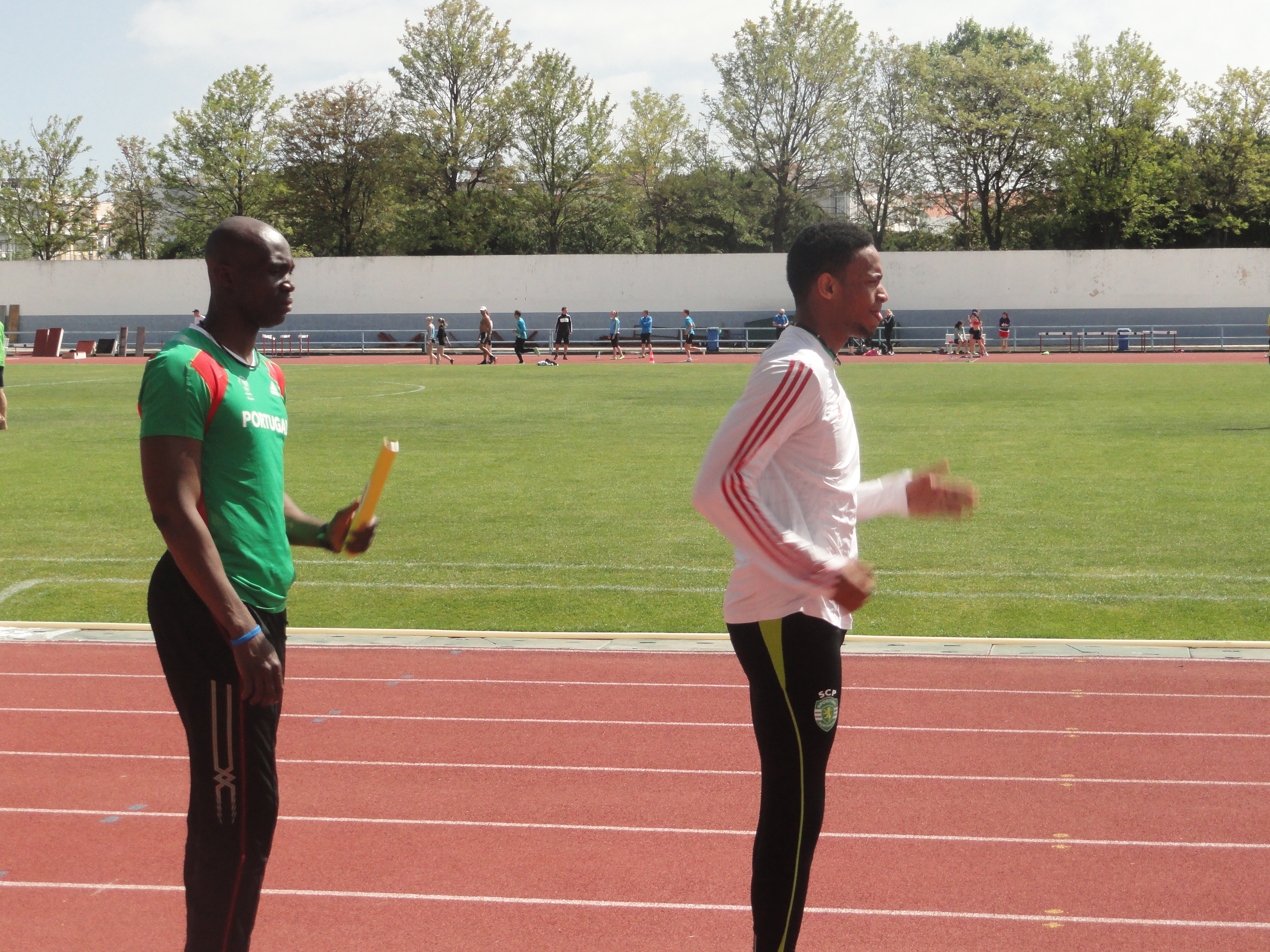
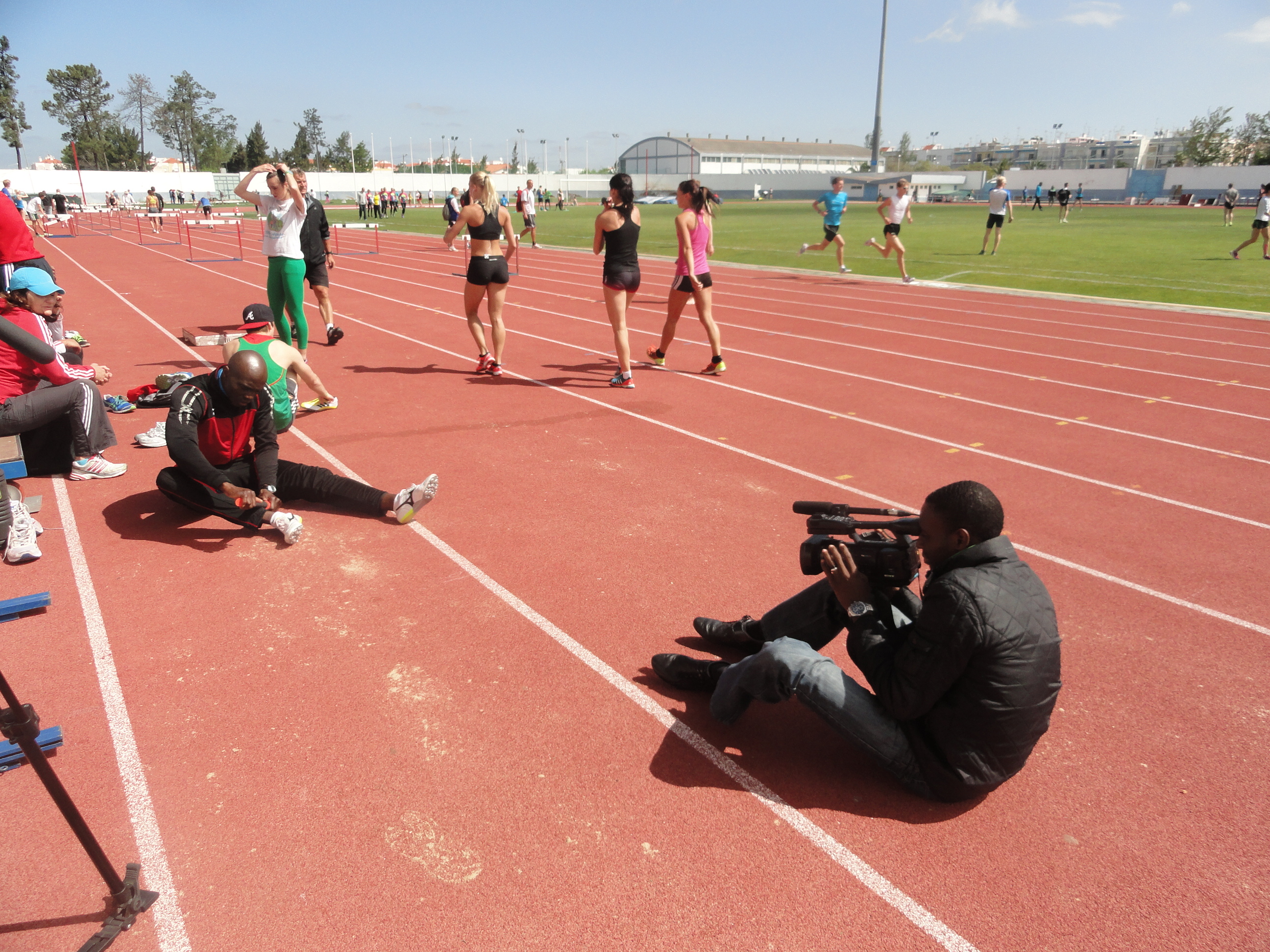
On that fateful day, only America’s Justin Gatlin got the better of him, by a hundredth of a second. In short, Francis became the very first Nigerian man in history to win an individual sprint medal, and he won it competing for his new national colours of Portugal! Make no mistake, this is a tragic tale for Nigeria, a stark example of how over the years we have contrived to waste away our immense potential to dominate Track and Field, not just on the African continent, but globally! Probably just as well, because Francis’ 100m silver medal ended up going a country that could really appreciate what winning an Olympic medal in sprinting meant to them, after all it was the first and only Olympic medal in the sprints that Portugal has ever won! Can you believe that on the day of the race, the President of Portugal gave the whole country a day off to watch Francis run in the final? A whole day off – just to watch a 10 second race? And after winning the silver medal, a private jet, along with the armed forces were sent to take him directly back to Portugal, where crowds of people waited at the airport to cheer his triumphant return? Wow…I want to be Portuguese too! I haven’t even spoken much about our very eventful trip to meet him in Portugal last month, so I’ll leave you with some pictures which hopefully convey what a great time we had meeting him and getting to spend some time with him and the rest of the Portuguese national Track and Field team – Enjoy!
In times past, countries from the southern part of the African continent were not regarded as good producers of the world’s best runners, but recently, Botswana, which was once considered a minnow in Africa and the world athletics stage, is proving that innate talent can be found in any part of the world irrespective of […]
The breakthrough performances of many South African athletes in 2014 has confirmed the country’s status as the reigning powerhouse of athletics on the continent. There is no denying that South Africa’s dominance in African athletics, took a sharp nosedive since their triumph at the 2008 African Championships in Addis Ababa, which completed a hat-trick of […]
In the sporting world, Cote d’ Ivoire is well known as a power house in African football , and globally for the production of stars such as Didier Drogba, the Toure brothers (Kolo and Yaya), and a host of other big names. About a decade ago, suggesting that the West African country would produce a […]
On Tuesday we started the countdown of our TOP 12 athletics performers whom we think stood out exceptionally well for the Green-White-Green of Nigeria, listing Nos. 12-7. We now conclude the series with Nos. 6-1! 6. FOLASHADE ABUGAN: The 2014 season couldn’t have gone much better for Abugan, given that teammate Regina George started the […]
Team Nigeria athletes put up a commendable outing during the 2014 Athletics season. Some athletes stood out based on their individual performances, personal records and medals won in their various events. Here’s a countdown of the TOP 12 athletics performers whom we think stood out exceptionally well for the Green-White-Green of Nigeria: 12. CHINWE OKORO: […]







 Making of Champions
Recent Comments